In September, 2024, New York State kicked off the process to develop the State Energy Plan, which is supposed to be a comprehensive roadmap for a clean, resilient, and affordable energy system for all New Yorkers. The Energy Plan was last updated in 2020, when it was amended to incorporate the objectives of the 2019 Climate Leadership and Community Protection Act (Climate Act). Since the 2020 update, the Climate Action Council produced its Scoping Plan, examining many of the energy issues that contribute to climate change and offering a number of recommendations for the State to implement. The State Energy Planning Board will now convene to begin the process of producing a draft, then a final plan, for this planning cycle. Currently planned to be considered by the Board in December 2025, the final plan will provide a 15-year outlook and focus on strategies to meet future energy needs and advance economy-wide decarbonization. The Hochul Administration has also expressed a desire to balance decarbonization with reliability, affordability, environmental and public health impacts and economic growth.

The climate emergency is here; how will New York’s Energy Plan meet this moment? New York State is required to update the State Energy Plan every 5 years and 2025 is the year a new plan will be put in place. What is the importance of the Energy Plan? Will the Energy Plan be compliant with the Climate Law? How can advocates participate to ensure the Energy Plan will result in a swift and equitable transition to clean energy?

If you missed this teach-in you can watch the recording here along with the presenter’s slides:

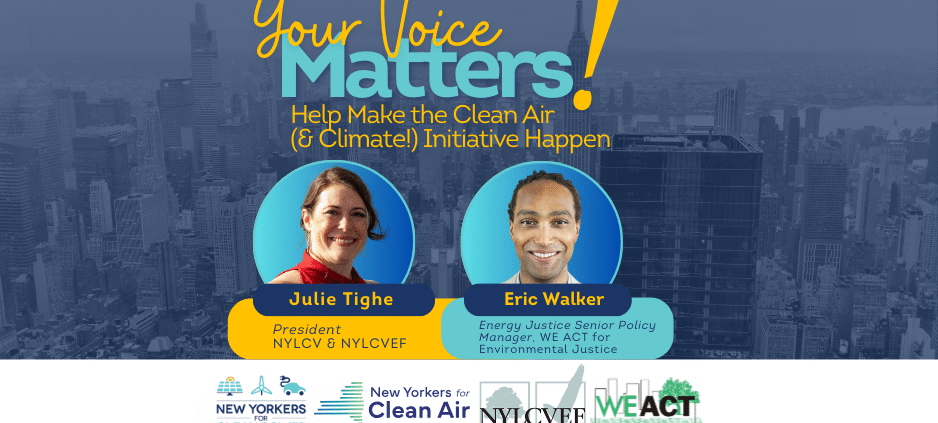
Learn how the Clean Air Initiative can ensure the CLCPA’s environmental justice and greenhouse gas reduction goals are backed by enforceable regulations with mandatory emission limits on New York’s top-emitting sectors, buildings and transportation. We’ll walk you through how to use New York’s official public comment tool to weigh in on the recently proposed Mandatory Greenhouse Gas Reporting Rule, which requires corporate polluters to tell us what they are dumping into our air (really important as EPA has signaled that it will end this requirement at the federal level).

Missed the event? No problem. You can still access the recording of the teach-in, and you can check out the presenters’ slides here.

Featured speakers were:

  • Julie Tighe, President NYLCV & NYLCVEF
  • Eric Walker, Energy Justice Senior Policy Manager, WE ACT for Environmental Justice
  • Moderated by Betta Broad, Campaign Director, New Yorkers for Clean Power & Association for Energy Affordability

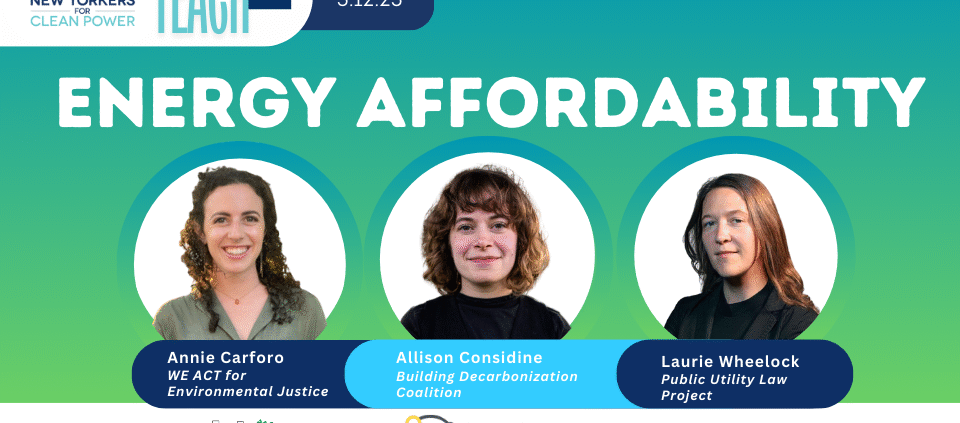
In March, we gathered advocates, organizers, and energy experts for the “Energy Affordability in New York: Understanding the Crisis and Taking Action” Teach-In.

Across the state, over 1.3 million residential accounts are more than 60 days behind on utility payments, with total arrears reaching nearly $1.9 billion. Low- and moderate-income New Yorkers are disproportionately affected, often paying far more than the state’s recommended energy burden threshold of 6% of household income. As utility debt mounts and the cost of maintaining fossil fuel infrastructure continues to rise, ratepayers are footing the bill—unless bold action is taken.

These conversations highlighted critical budget priorities, including full funding for the EAP, support for the NY HEAT Act, and the Green Affordable Pre-Electrification (GAP) Fund. Together, these efforts can ensure New Yorkers are no longer forced to choose between paying their energy bills and meeting other basic needs.

Missed the event? No problem. You can still access the recording of the teach-in, and you can check out the presenters’ slides here.

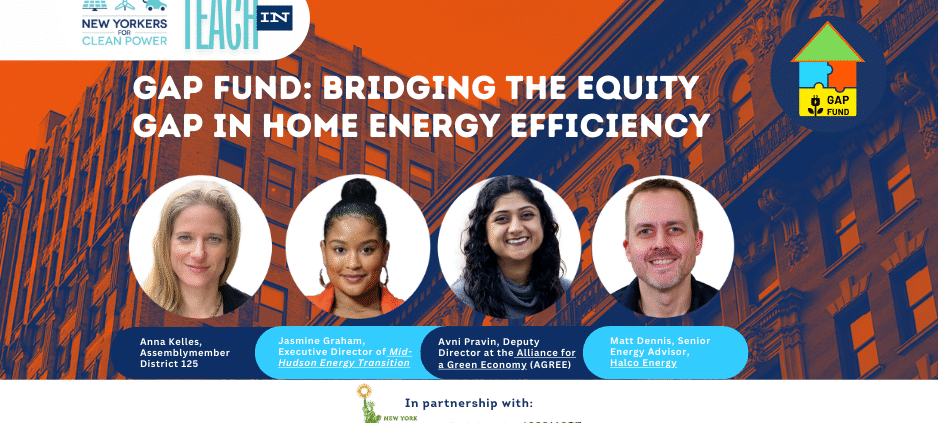
In January, our expert panel and advocates joined us for the “The GAP Fund: Bridging the Equity Gap in Home Energy Efficiency” Teach-In. We’re energized by the important conversations and engagement around ensuring all New Yorkers—especially low- and moderate-income households—can access home energy upgrades that improve health, lower costs, and support an equitable clean energy transition.

In New York, many low- and moderate-income households face financial and structural barriers that prevent them from accessing home energy efficiency upgrades. Outdated wiring, insulation issues, and other health and safety hazards can disqualify homes from participating in existing clean energy programs. These barriers leave vulnerable communities with high energy bills, inefficient homes, and unsafe living conditions. To address this issue, legislators have introduced the GAP Fund (S8535 González/A9170 Kelles), a funding mechanism designed to eliminate these pre-electrification barriers and ensure equitable access to clean energy solutions.

Since its introduction, advocates have highlighted the GAP Fund’s potential to support economy-wide decarbonization, improve indoor air quality, and lower energy costs for New Yorkers who need it most. However, despite its importance, the GAP Fund is not currently included in the state budget, making advocacy efforts essential to securing funding. The fund would provide critical financial support for necessary home repairs, ensuring that more households can transition to cleaner, healthier, and more affordable energy solutions.

Missed the event? No problem. You can still access the recording of the teach-in, and you can check out the presenters’ slides here.

Featured speakers were:

New York has set an ambitious climate plan to reduce greenhouse gas emissions, but false solutions threaten to derail progress. In this teach-in, we will examine three problematic solutions: so-called “renewable natural gas,” hydrogen blending for buildings, and carbon capture and storage, all of which could impede real climate action.

Missed this one? Find the recording here along with the presenters slides:

Take Action:

Sign up to go to Albany withttps://youtu.be/Wp9keIS_eroh Renewable Heat Now on Wednesday, January 29th: https://actionnetwork.org/events/renewable-heat-now-albany-rally-and-lobby-day


Guest Speakers:

● Hillary AidunEarthjustice

● Erin MurphyEnvironmental Defense Fund

● Carolyn Raffensperger, The Science and Environmental Health Network

—————————————————————————–

Hillary Aidun, Senior Associate Attorney Earthjustice A senior associate attorney in the Northeast Regional Office. Hillary works to advance environmental justice in the northeast region and advocates for meaningful and equitable implementation of New York’s climate law in state court and before administrative agencies. Before joining Earthjustice Hillary was a fellow at the Sabin Center for Climate Change Law at Columbia Law School, where she worked on expanding renewable energy resources, challenging federal regulatory rollbacks, and tracking New York State climate law.

Erin Murphy, Senior Attorney, Energy Markets & Utility Regulation Areas of expertise: Natural gas and electricity market design, natural gas policy, utility regulation. Erin represents EDF in regulatory proceedings involving the design of wholesale and retail natural gas markets, seeking to facilitate the clean energy transformation. She advocates before state public utility commissions for gas supply planning mechanisms to prevent unneeded long-term investments in gas infrastructure, and for utility adoption of programs to reduce methane emissions from gas distribution networks. Erin also advocates before the Federal Energy Regulatory Commission for new and better ways to facilitate renewable energy integration and harmonize the wholesale natural gas and electricity markets.

Carolyn Raffensperger, Executive Director Environmental Health Network. While working as an archaeologist in the desert Southwest of the U.S., she was enchanted by the beauty of the landscape and horrified at the environmental threats posed by dams, mining and toxic waste disposal. She left archaeology to work for the Sierra Club in Illinois. The desire to protect the rivers, prairie and desert led her to law school. Her graduate school training in archaeology and her law school education provides the tools Carolyn needs to serve her clients—the future generations of all species.

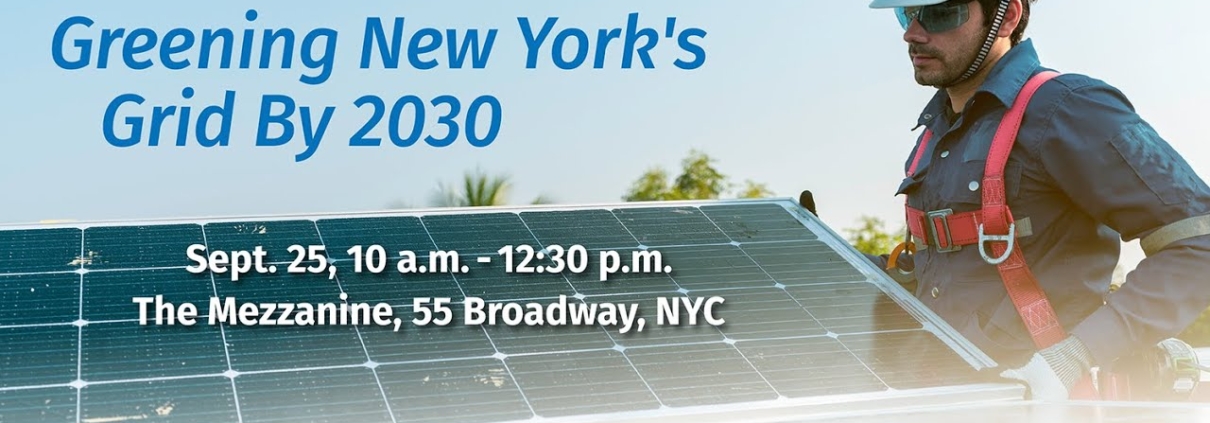
New York’s Climate Law stated we should reach 70% renewable energy by 2030, and we always knew this would be a difficult task. New York underwent a massive shift to renewable energy, and despite tremendous progress, there were still many roadblocks that kept projects from reaching construction and operation. We heard from experts on why we needed to dig in on our commitment to the transition and what policies we needed to implement to get us there. We focused on successes and lessons learned over the last four years and laid out specific ways the public could support these policies. Every megawatt of clean, renewable energy that came online and served New York’s power grid was a win for New Yorkers, and we needed to do everything we could to deploy as many renewables as possible by 2030.

In our three-part program, we began with a keynote presentation on the efforts made by our elected officials and the renewable energy industry to build projects in an expedited, yet responsible manner, followed by presentations that focused on how distributed energy (residential and community solar, and battery storage) would play an important part in our transition. Our main panel discussion focused on why this transition should be a top priority in New York, with an emphasis on environmental justice and the economic and health benefits of our renewable transition. At the end of the program, a light lunch was served.

Here is the recording of the event, check out our Facebook album, and check out the Presenters’ slide from the renewable energy deep dive segment:

Take Action

During the event we discussed the importance of New Yorkers across the state doing their part in helping New York reach its renewable energy goals. One easy way to get involved is by taking action today:

Text “GREEN GRID” to 52886 or click here to urge Governor Kathy Hochul to take these next steps in progressing NYs clean energy future.

Speakers included:

On Thursday, September 12, 2024, the NYS Chapters Coalition hosted an engaging panel discussion on the growing issue of climate anxiety and how it affects people across different age groups and professions. The event featured expert insights from Dr. Jennifer Fendya (licensed psychologist), Dr. Divya Gupta (environmental social scientist), and Lauren Kim (NYU student and climate activist).

The panel explored various dimensions of climate anxiety, from the emotional burden felt by young people to the psychological and community-level responses to the climate crisis. The conversation also touched on how emotions like fear and anger can drive positive action and how we can support individuals experiencing anxiety.

For those who missed the live session, the full panel recording is available on our NYCP YouTube channel.

As New York transitions to clean energy, community involvement is crucial to the success of renewable energy projects like wind and solar. These projects not only help combat climate change but also bring local benefits, such as job creation and healthier environments. In this meeting of the Support the Supporter network, led and moderated by Len Lunka, Renewables Outreach Coordinator with NYCP, participants will explore case studies of community solar projects in New York and discuss their significance as we push for larger utility-scale renewable initiatives to take effect.

Speakers:

  • Jonathan Cohen Policy Director, NYSEIA
  • Kate Selden Senior Policy Analyst, Solar One